Abstract:
Conventional surgical techniques to seal and repair defects in highly stressed
elastic tissues are insufficient. Therefore, this study aimed to engineer an inexpensive, highly adhesive, biocompatible, and biodegradable sealant based on a modified and naturally derived
biopolymer, gelatin methacryloyl (GelMA). We tuned the degree of gelatin modification, prepolymer concentration, photoinitiator concentration, and
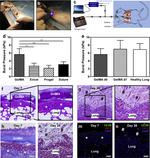
crosslinking conditions to optimize the physical properties and adhesion of the photocrosslinked GelMA sealants. Following ASTM standard tests that target wound closure strength, shear resistance, and burst pressure, GelMA sealant was shown to exhibit adhesive properties that were superior to clinically used fibrin- and poly(ethylene glycol)-based glues. Chronic
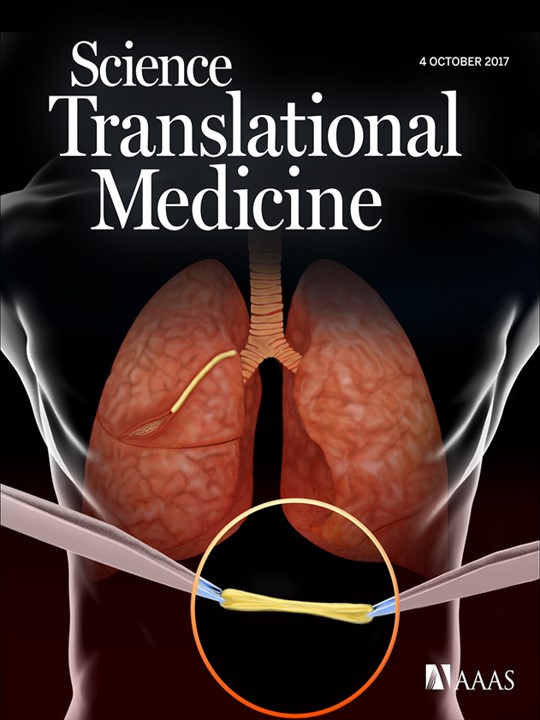
in vivo experiments in small as well as translational large animal models proved GelMA to effectively seal large lung leakages without the need for sutures or staples, presenting improved performance as compared to
fibrin glue, poly(ethylene glycol) glue and sutures only. Furthermore, high biocompatibility of GelMA sealant was observed, as evidenced by a low inflammatory host response and fast
in vivo degradation while allowing for adequate wound healing at the same time. Combining these results with the low costs, ease of synthesis and application of the material, GelMA sealant is envisioned to be commercialized not only as a sealant to stop air leakages, but also as a biocompatible and biodegradable hydrogel to support lung tissue regeneration.